How do we make sure as music teachers, that composing and creating music stay central to learning rather than get squeezed out by the quicker wins of getting young people to “just play”?
I have been trying to stay conscious of the Musical Futures International Explore, Recreate, Create framework in my planning this year.
In this approach, the learning experience centres firmly on the students — their curiosity, confidence, and musical agency. Rather than following a fixed sequence of teacher-led steps, students enter into a cycle of explore, recreate, and create that mirrors how musicians actually learn.
Explore invites young people to engage with music by listening, experimenting and developing core skills with practical, sound-first experiences. It builds a foundation of musical understanding based on what students hear and feel before introducing notation or abstract concepts.
Recreate gives them the chance to immerse themselves in music they care about. They model and internalise musical ideas by performing, arranging or reproducing real songs and sounds, using familiar material to deepen aural awareness and practical technique.
Create supports them to take ownership of their learning by composing, improvising and producing original musical ideas that draw on what they have explored and learned. This isn’t an “extra” at the end but an integral part of how they make meaning from their experience.
The structure encourages students to develop musical confidence and independence by making choices, solving creative problems, reflecting on their work and collaborating with peers. By embedding composing alongside exploration and performance in every learning cycle, students are supported to become active makers of music rather than just responders to it.
The principle is straightforward but important. Students move through these phases in a cycle. They use resources and models to get started, but they also have regular opportunities to create. Composing is not an optional extra and not something saved for the end. It is an equal and integral part of learning.
Over time, I have found it more effective to apply this cycle within a single lesson rather than leaving ‘create’ until the end of a unit. In reality, the final weeks of a scheme of work often coincide with the busiest points in the school calendar. Those lessons we imagine will allow space for creativity are frequently the ones disrupted, shortened or lost altogether.
So perhaps the issue is not whether we value creativity. It is whether we are intentional about when it happens.
What might it look like to build Explore, Recreate and Create into the structure of individual lessons or existing schemes of work? I have shared examples from our 7 week ukulele unit that we currently do with Year 4.
Idea 1 – compose your own strumming patterns
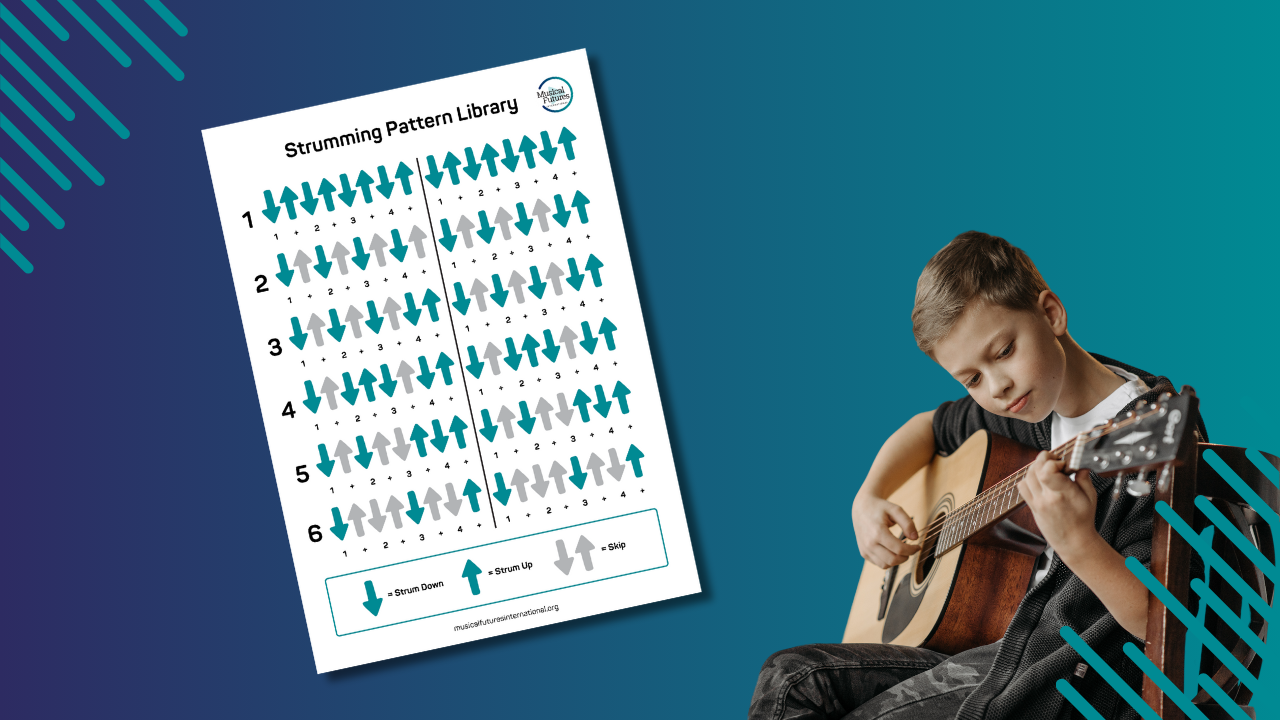
As soon as they could hold the instrument securely, strum with control and play A minor confidently, they began creating their own strumming patterns using these templates. They used these to play along with the Musical Futures International ECP Uke scheme 1 chord Am jam backing track.
Some added extra chords if they were ready. Most stayed with open strings while building strength and co-ordination. Everyone was able to contribute at their own level. The backing track was played throughout so that there was always a link back to a musical outcome and a ‘real’ piece of music.
From the outset, they were not just learning how to play, but were also shaping the music themselves.
Idea 2 – compose, notate and play a melody
We warmed up with a play-along video from Mr Henry using open notes C and G, which quickly settled the pulse and got everyone focused.
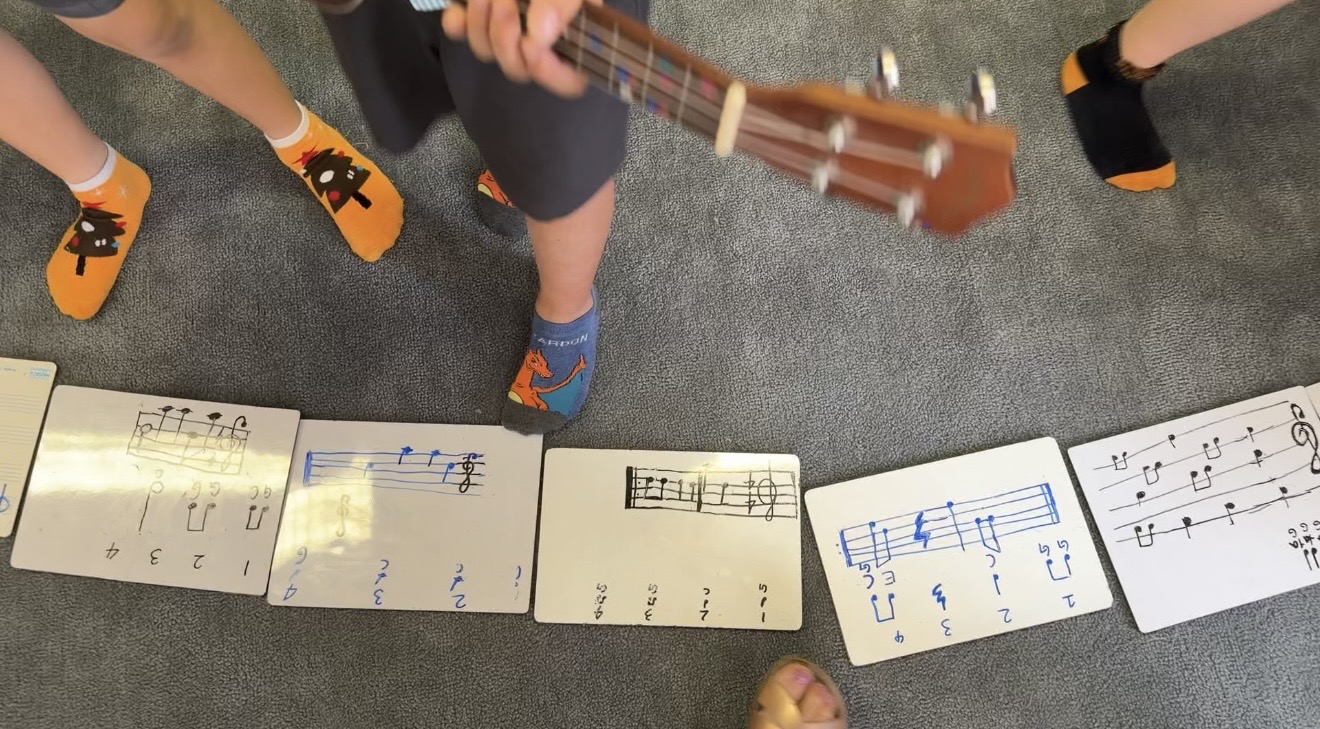
Working in pairs, students then took a whiteboard and composed a four-beat rhythm. They added open notes we had just played to a stave and we arranged the boards in a long “snake” around the room. Playing along to a simple C–G–Am–F backing track, they followed the boards around the room, reading and performing each other’s riffs as they went.
Because every four-beat idea used the same set of notes, everything fitted. The result was a collaborative piece where each student’s small contribution became part of something bigger. They were composing, performing, reading and listening at the same time, shaping their own pathway through the music.
Idea 3 – Compose your own chord progression
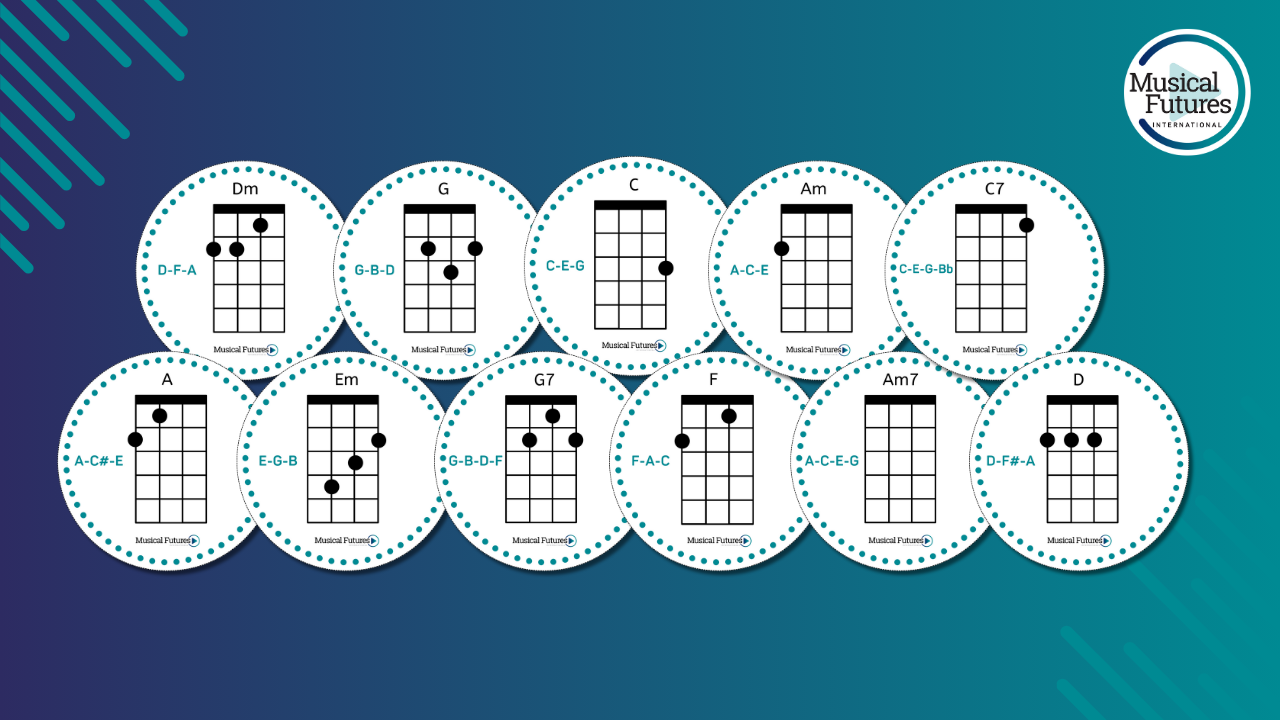
As their confidence with a few chords grew, chord spots gave them more opportunities to create. In groups, they chose chords, tried them out, listened carefully and adjusted. They combined them with their strumming patterns and decided what sounded good and why.
The focus shifted from simply playing the right shape to making musical choices, justifying them and refining them together based on how they sounded.
Idea 4: Write and sing your own lyrics to a generic backing track that repeats 5 times
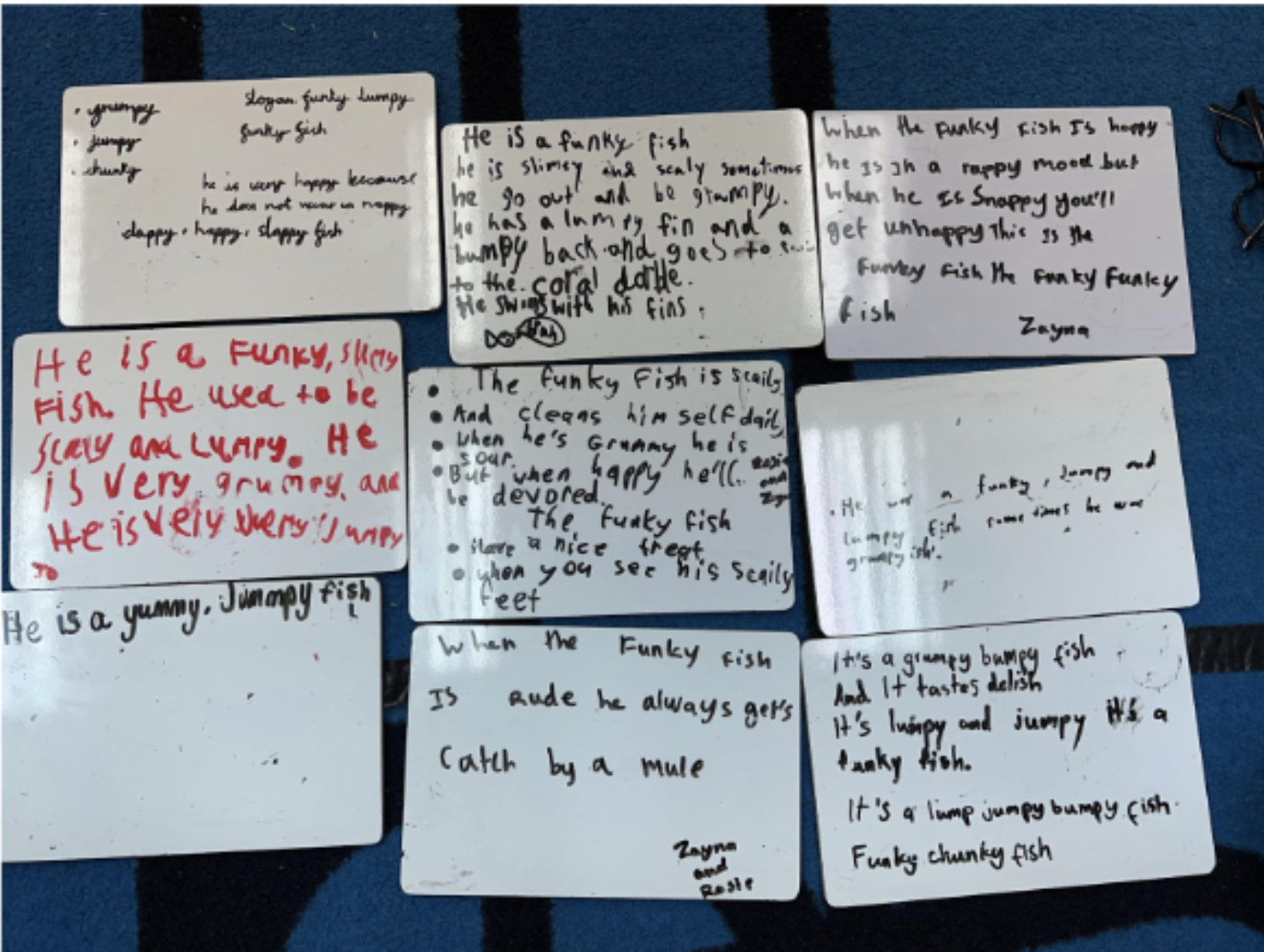
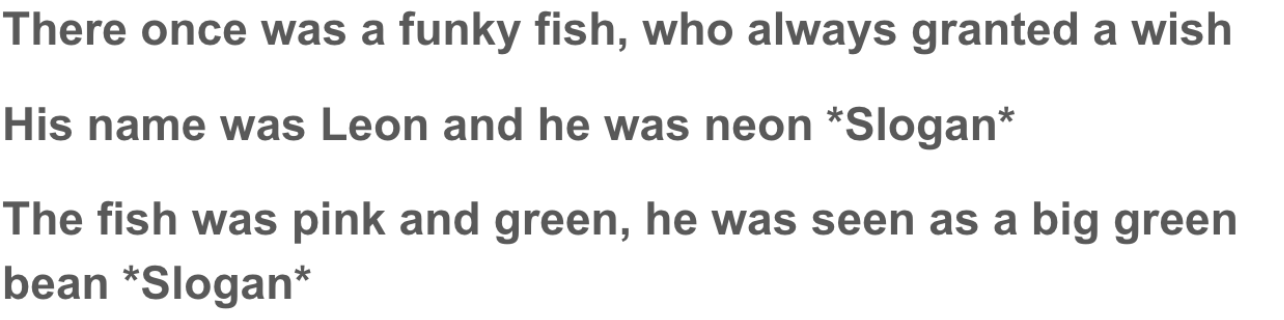
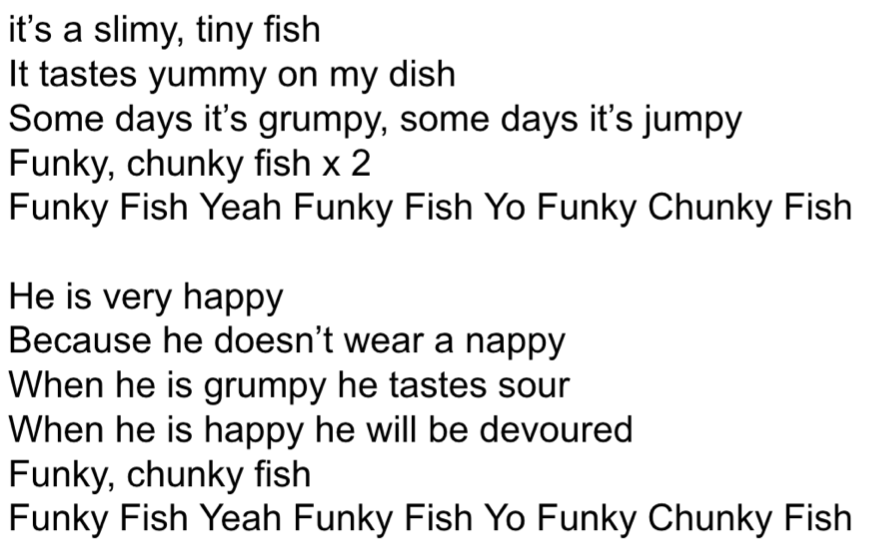
We used the ECP Uke Funky Fish play along video to write and sing our own lyrics. Here are some examples – they loved getting these to rhyme and to come up with crazy stories and adventures for the fish using some of the excellent Hip Hop Vocal resources from Music Will.
If we want students to see themselves as musicians, not just learners of music, then composing/creating music cannot be something we postpone or ignore altogether. It has to sit alongside playing from the very beginning.
Across these lessons, the pattern is simple. As soon as students have enough technical control to make a sound, they can start making choices. Whether that is shaping a strumming pattern, building a 2-note, four-beat riff, selecting chords, or deciding what sounds good together, the creative act is woven into the practical music making.
Explore, Recreate and Create can sit side by side within a single lesson, allowing musical understanding to develop as a natural part of the process rather than as an added extra.
We often recognise the creative spark when we see it emerging as students play. The challenge, perhaps, is to notice those moments and plan for them in all lessons, building in regular opportunities to be intentional about composing as the learning unfolds.
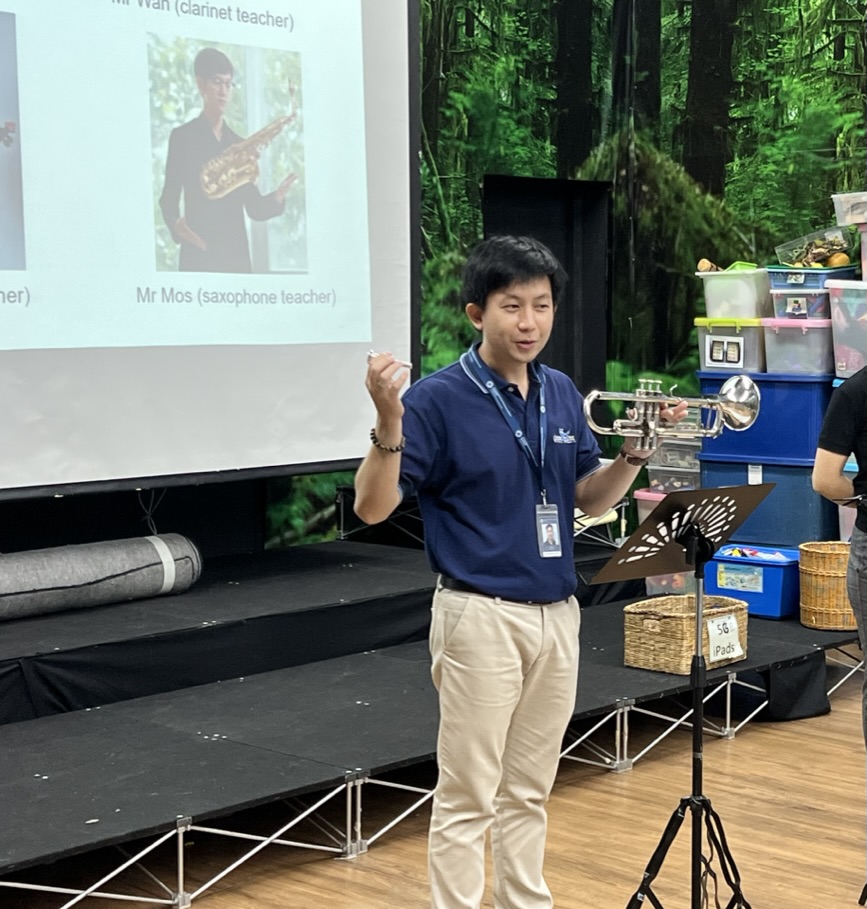
In September 2025, as part of my ‘Tune In Live’ session at the FOBISIA Music Teacher Conference, I set out to capture a clear snapshot of group and whole class instrumental learning across FOBISIA schools. The aim was to establish a starting point for developing shared strategies for implementing and leading instrumental learning. My interest in this area comes from managing the primary section of our instrumental programme over the past two years at St Andrews International School. At our school every student in Years 5 to 9 is given an instrument/log into an online DAW and receives one hour of tuition each week for the full five years. This system was already in place when I joined the school, first as a Teacher of Music and later as Head of Primary Music, although in the last 2 years we have expanded what we offer from the original 5 orchestral instruments to 7 and added an electronic music production stream called Young Producers to build a more varied and progressive offer for our students.
At this year’s conference the session time was limited, so I used several approaches to make the most of the expertise within the FOBISIA Music community. On arrival delegates helped create a visual map of current practice by placing post-its on a timeline to show what their schools provide. I also placed key questions on posters around the room and asked colleagues to add their own responses. These questions were drawn from issues raised at the previous conference, from my own experience and from discussions within a primary music focus group I am part of.
The review of whole class and co-curricular instrumental programmes across a range of international schools shows a diverse landscape. Programmes differ in structure, time allocation, instrument choice and progression models, but several consistent themes emerge. These themes provide useful guidance for anyone designing or refining an instrumental learning programme.
Wide variation in programme design
The case studies show no single model for whole class instrumental learning. Provision ranges from one hour per week on a single instrument for several years to termly rotations through different families of instruments. Some schools base instrument choice on existing staffing. Others design programmes around ensemble needs. Several schools like us are exploring new pathways, such as electronic music or msuic production, for students who are less engaged with more ‘traditional’ (orchestral) instrumental routes.
A common challenge is space and logistics. Managing large groups, multiple instrument types and varied ability levels places significant pressure on room layout, storage and staffing.
Instrument choices and ensemble alignment
Across the schools studied, the most common whole class instruments are ukulele, recorder and violin. These appear across all age groups due to their affordability, durability and accessibility for beginners. Cello, keyboard, tuned percussion and viola have moderate uptake. Brass instruments and flute are less common, usually due to cost, size, noise levels or lack of specialist staff. Rare instruments such as harp or bassoon appear only occasionally.
Several schools identified the importance of selecting instruments that support later ensemble development. Where the initial choices were too narrow or lacked balance, schools later added lower strings or brass to strengthen ensemble structures.
Progression pathways are essential for long-term engagement
Structured progression is a common theme across all models. Clear pathways increase retention and help students see the purpose of early instrumental work. Typical models include: • Whole class learning at no cost • Small group lessons as an optional or paid next step • Pathways into ensembles, orchestras or performance groups
Some schools continue these pathways into secondary years through compulsory participation, enrichment classes or more flexible programmes that broaden musical options.
Digital tools also play a role in creating arrangements that fit unusual instrument mixes or limited instrument stocks, which is a frequent need in international settings.
The importance of collaboration and leadership support
Effective whole class programmes depend on coordinated staffing. The strongest models involve collaboration between classroom music teachers and peripatetic specialists. Regular planning time, peer observations, shared resources and leadership buy-in are key factors.
Leadership support is particularly important for funding, long-term planning and maintaining consistency when staffing changes. Schools report that inconsistent expectations and unclear progression routes create confusion for both staff and students.
Inclusion, access and cultural breadth
Inclusion is a central motivation for whole class instrumental work. Schools emphasise the value of providing access regardless of background or financial means. Many programmes also include cultural or traditional music, such as gamelan, Chinese ensembles, steel pans or local heritage instruments. These broaden the musical experience and support engagement.
Some schools have created alternative pathways, such as electronic music production-based streams, as a valued alternative to orchestral instrumental learning. These pathways still include performing and composing but use technology and hardware to ensure access.
Common challenges across all models
Despite the variety of programmes, several challenges appear consistently: • Mixed ability and mixed experience groups • Limited instrument choice due to cost or availability • New students joining mid-year • Risk of disengagement when learning becomes difficult • Tracking progress across large or varied groups • Limited space, storage and staffing • Balancing performance focus with curriculum expectations • Maintaining progression in environments with high student mobility
These issues require systematic solutions rather than individual fixes.
Practical Strategies for Strengthening Instrumental Learning
The findings across schools suggest several practical approaches that can support effective instrumental learning, regardless of programme model.
1. Establish clear routines and systems
• Create consistent systems for budget, purchase, setup, handling, repairs and storage of instruments. • Provide simple visual guides for younger learners and practical checklists for older groups. • Keep equipment accessible to minimise lost lesson time.
2. Choose instruments that support long-term ensemble development
• Balance accessibility with future ensemble needs. • Ensure instrument families include lower instruments (eg trombone/cello) where possible. • Review instrument choices periodically as staffing or resources change and survey students and parents regularly to monitor engagement.
3. Build progression into the programme from the start
• Set out clear steps from whole class learning into small groups and ensembles. • Communicate these pathways to students, parents and staff. • Allow time for ensemble skills development alongside instrumental learning.
4. Use adaptable resources to manage mixed groups
• Select materials that suit varied ability levels within a single class. • Use digital tools to adjust keys, simplify parts or create flexible ensembles. • Maintain a shared library of graded repertoire.
5. Strengthen collaboration with peripatetic staff
• Involve specialists in planning so that resources and expectations are aligned. • Provide opportunities for joint teaching where possible. • Ensure that peripatetic input is recognised and supported by leadership.
6. Plan for inclusion from the outset
• Provide alternative pathways, such as digital or production-based options. • Keep instrument groups small enough for meaningful support. • Ensure new students have entry points that do not rely on previous experience.
7. Keep the cultural dimension active
• Include traditional or regional instruments where available. • Use ensemble projects to expose students to unfamiliar styles. • Link cultural units to performance opportunities.
The ‘Aspire Young Producers’ project at St Andrews International School is supported by Musical Futures International and Roland. Read more about the Primary School Young Producers Programme here.
Introduction
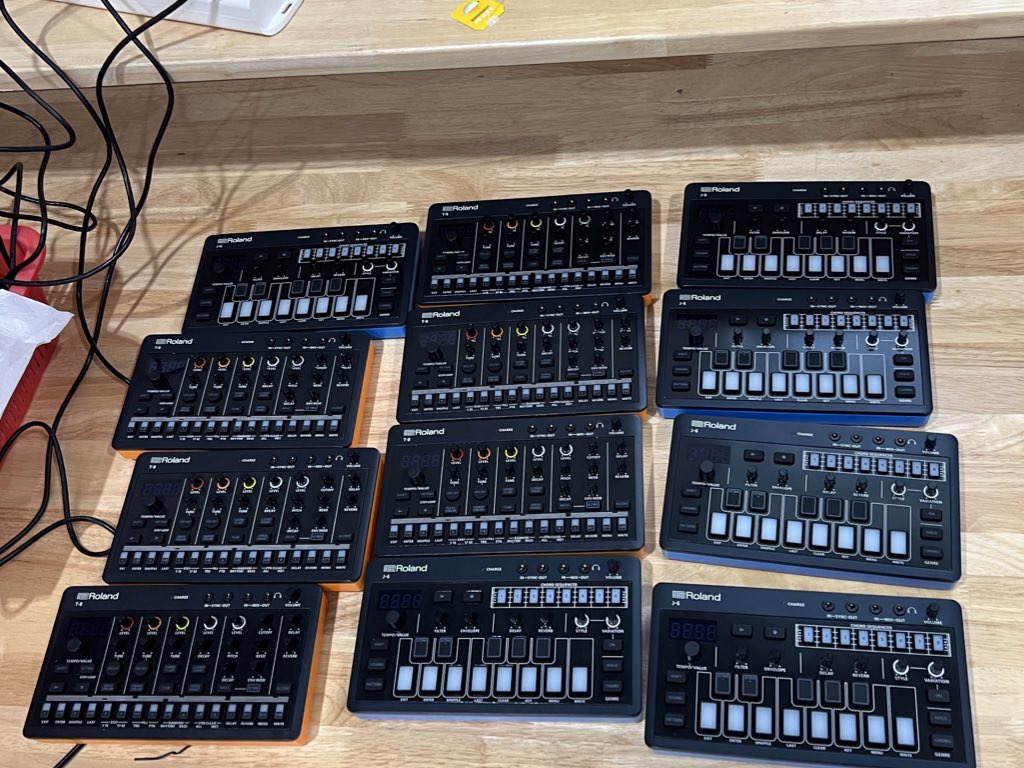
As music educators, we often face the challenge of maintaining student engagement and encouraging skill development when using music technology for learning. In my Year 6 Young Producers class, I observed an interesting pattern: after observing an initial period of play-based exploration with Digital Audio Workstations (DAWs) and hardware like the Roland T8 and J6, my students tend to abandon projects and start a new one rather than reflect, refine, accept feedback and finish them. This is despite one aim of the project to be grounded in student choice, with me as the teacher offering personalised and tailored feedback and support. These observations led to the addition of the Recreate Challenge to our Year 6 Young Producers curriculum, a project designed to encourage persistence, identify learning gaps, and gather student reflections on their learning to date.
Aims of the Recreate Challenge
I developed the Recreate Challenge with several objectives in mind:
Encourage students to see a project through to completion
Identify gaps in their technical knowledge and skills
Gather reflections on their creative process
Provide a structured yet creative task with a clear goal
Implementation and Overview
The challenge was structured in three distinct parts:
Choose a tool from Soundtrap, GarageBand, or Roland T8s/J6s (based on what we have available)
Select a song from a provided list
Complete a recreation of the chosen song using their selected tool
This part of the challenge allowed students to apply their skills in a focused, goal-oriented task while working with familiar tools and resources.
Part 2: Reflection
After completing their recreation, students were given a reflection sheet. This encouraged them to think critically about their experience, considering questions such as:
What aspects of the recreation did they find most challenging?
Which skills did they feel improved during the process?
How did this structured task differ from their previous exploratory work?
What new insights did they gain about music production?
This reflective component was crucial in helping students articulate their learning and in providing me with valuable insights into their progress and needs.
Part 3: Design a Medal
As a final, creative touch to the challenge, students were asked to design a medal that would recognize the completion of all three tasks. This aspect of the challenge served multiple purposes:
It provided a tangible goal for students to work towards
It allowed for creative expression beyond music production
It reinforced the sense of achievement in completing the challenge
Implementation
Students were given clear guidelines for each part of the challenge, including:
A specific timeframe for completion
Prompts for the reflection sheet
Template for the medal design
To motivate participation, the completed medal designs were printed and stuck onto medals we had left over from an instrumental competition (that the producers hadn’t really engaged with given its traditional focus on singing and instruments rather than music production)
Outcomes and Observations:
NB many of my learners have English as a second language so I have left their words unedited, as they wrote them to me.
The Recreate Challenge yielded several positive outcomes:
1. Increased Persistence: Students showed greater commitment to completing their projects even though they would tell me several times that they were finding it hard. The clear structure around the task and being able to refer them back to the tutorial videos, encouraging them to start again if needed helped me to focus my support on keeping them motivated and encouraging them to problem solve for themselves rather than rely on me to do it for them
Things I found hard – the complicated video and buttons ( tried more than 5 times)
Recreating songs is hard work
2. Skill Identification: Both students and I could clearly see which areas of music production need more focus in the next stage of teaching and this came out in the reflections. I was also encouraged by the learning they identified as having taken place
Piano Roll is INSANELY DIFFICULT , I don’t know why but it’s absolutely a nightmare to do it.
The piano roll is complicated
I found the Lead , Pad and Bass very difficult because of the complicated controls of the piano roll and the insane zoom in and zoom outs and gaps.
I learnt how to use the patterns beatmaker which was something that I didn’t even know it existed
I learnt how to add new tracks with instruments
I learnt how to use the Piano Roll
The zoom feature is especially useful , the zoom in and zoom outs help a lot with small details
There are lots of different sounds to select from in the DJ Controls , my favourite being Sunset City
The piano roll, because it is hard to place the notes, and the bass because it is hard to look for the style
3. Problem-Solving:It was interesting to watch the students discover that they needed to think for themselves as well as follow the videos. I was also really interested to observe that having mostly chosen chosen Soundtrap as their preferred platform, perceiving the J6 and T8 devices as ‘too hard’, some changed their minds, discovering that they had not even scratched the surface of what the DAW could do in their play-based work to date and that actually it was more challenging than they first thought.
It really hard to make beats with instruments
Lyric are hard to add
It hard to recreate to song perfectly
Platform I chose – J-6, Why I chose it – The computer was too hard
4. Peer Learning: Sharing their processes led to valuable peer-to-peer knowledge exchange. In some cases, children started to work in pairs to trouble-shoot together and I actually joined a group to learn alongside them in one case when they were on the verge of giving up completely, only to step back when they got going again.
Adding things on the piano roll was hard because I never used it and I didn’t know how to make it 16 bars like in the video but I found out in the end
I didn’t make any large changes to my choices but at first , we were going to do Save Your Tears by The Weeknd since we thought it sounded best but me and and my friend decided that Birds Of A Feather sounded better
5. Reflection Skills: Students improved their ability to articulate their creative decisions and challenges.
At First, I chose GarageBand because I wanted to try new things but changed from GarageBand to Soundtrap because GarageBand was a bit difficult for me as I have never used it to make music.
I chose this song because this song my childhood classic so I know how the song goes so I’m really used to it and I love it (but) I actually changed the blinding lights to save your tears and it was really hard to make the beat because it has a low high low high pitch which will make it extremely hard.
Many students reported a sense of accomplishment in completing the challenge. Common reflections included:
I found it easy when I concentrate and understand I’m able to do it and when I do it many time because I did lots of mistakes it make me use to it more
(I learned) how to react (and) to use new things
Aira is cool
I like succeeding
Conclusion
Based on the outcomes of the Recreate Challenge, I identified several areas for future focus in our scheme of work, which I will refine as a result of this project since this is the first year we have run it alongside our Y5 and 6 intrumental programme.
The Recreate Challenge proved to be an effective way to encourage persistence, identify learning needs, and foster reflection among young music producers. By providing a structured yet creative task, students were able to deepen their skills and gain valuable insights into the music production process. This approach not only enhanced their technical abilities but also developed important soft skills like problem-solving and self-reflection.
As we move forward, the insights gained from this challenge will inform our curriculum, ensuring that we continue to engage and challenge our young producers in meaningful ways.
A few months after I wrote my blog about Key Words and the value of using these in context as opposed to focussing on the elements of music as distinct entities, I started to work on a new Musical Futures approach for primary teachers and students which eventually became known as Just Play.
At the time, my role was as Head of Development for Musical Futures in the U.K. and my remit was to work in partnership with Musical Futures Australia to develop an approach to support generalist primary teachers to deliver whole class music making with their classes.
The resulting training and resource offer has since been adopted as one of the key Musical Futures approaches and is currently being delivered to over 2000 teachers across Australia as well as in Asia, UAE, New Zealand, Europe and the U.K.
During the 13 years of my association with Musical Futures in a number of roles, most recently as a consultant for Musical Futures International, I have been fortunate to work with incredible people and to have learned so much from others that has informed my thinking, my practice and to learn what has driven me as an educator and a musician.
As my time on the core team at Musical Futures in the UK came to an end, it was a great opportunity to reflect, to remember key events or moments that became significant in the journey. So I start with some of those.
I remember spending time in my classroom at Monks Walk with Lucy Green, looking aghast when she explained that to be part of the MF pathfinder pilot I would be allowing year 9 to make choices over repertoire, planning, musical needs and defining their own pathways through tasks.
It terrified me, I was the teacher, how could the students possibly be able to achieve anything if they were given too much freedom? I knew only one approach to music teaching-the one I had experienced for myself outside the classroom as a classically trained clarinet player, dependent on notation and very under confident with leading or delivering practical workshops as a music leader. Lucy’s book “Music, Informal Learning and the School: A New Classroom Pedagogy” (click for details) is a fantastic summary of that work that was just the start of 10 years of trying to get it ‘right’ in my classroom!
Lucy completely understood the classroom context and how teachers needed to adapt to make sure the pilot was a success. We enjoyed unpicking what we had seen the students achieve in the lessons and recently spent some time over Skype discussing the difference between haphazard and holistic learning and how one student from that very first pilot class made it onto the X Factor. This came as no surprise given that through MF he was able to express himself very successfully through singing and performing!
I have had endless edu-banter with David Price over so many issues, from the value of social media in the education community to the challenges of increasingly target-driven changes in our schools. Most recently we spent some time over breakfast on a glorious Australian summer day discussing the current edu-twitter debates over teacher led learning and direct instruction vs PBL and student centred approaches, a conversation that I look forward to continuing in the future.
I have worked with driven, creative and passionate people like Abigail D’Amore, who brought real balance and clarity to some of the big and hugely ambitious ideas we had for driving Musical Futures forward and who played such an important role in grounding MF in its pedagogical roots. Abi was also central to building the organisation as it now stands, independent in its own right having successfully transitioned from a fully funded project to an organisation now looking to a new future in the capable hands of Managing Director Fran Hannan.
Most recently I have loved co-developing the MF Just Play resources and training programmes with Ian Harvey and Ken Owen at Musical Futures Australia. It has been so valuable to look at the whole of MF through fresh eyes with them and with their teachers.
We have worked together to refine and plan and deliver new ideas and approaches and it has shown me that Musical Futures truly does have relevance anywhere that there are teachers looking for new ways to engage their students with music. Kids are kids, teachers are teachers and music is music. Let’s find a fit for everyone regardless of context.
They also taught me that it’s OK for training days and classroom music to be fun, that fun doesn’t make the intention any less rigorous or meaningful, just a far more enjoyable experience for everyone!
But of course along the way I have met and worked with so many teachers in schools and dedicated folk in the UK Music Ed sector that I think sharing part of my MF story as I will do below is by far the best way to thank everyone for the support and friendship I have found across my time with MF.
Musical Futures has been a massive personal journey for me, first as a practitioner having to completely redesign my identity as a musician and a teacher, then as I travelled and visited schools and worked with teachers to really try to understand what Musical Futures is when it is translated into practice at the chalk face.
I have also been trying to understand how and why it impacts on the lives of thousands of students and teachers across the world and how it can continue to change and adapt to the needs of those who are looking for ways to keep music relevant and meaningful for students in schools.
When I left Monks Walk in the summer of 2015, in my leaving speech, my line manager asked staff whether they had any idea of Musical Futures actually is.
Nobody could answer.
He had designed a poster that summed up what he thought my interpretation and use of Musical Futures in my classroom was. He described it as ‘a parallel solar system’ where everything is noisy and practical and chaotic and creative and the words he chose really summed up what Musical Futures had become in our school
Fun, Challenging, Inspirational, Groundbreaking, Inclusive, Excitement, New Experiences, International.
I was so happy that over the years of observations, discussion, disagreement, negotiation, banter, partnership, collaboration and so much more that this was the impression he had formed of it. It was a lovely way to leave.
Musical Futures can be all those things. But how do you know when you walk into a class that it’s Musical Futures in inspiration or design? Is there a definition, a description or something that remains consistent no matter how and where it’s applied?
I’ve been visiting MF schools over the past 7 years or so, but back in October 2015 I led a tour of MF Champion schools accompanied by a group of teachers from Australia, New Zealand and Canada that really gave me the opportunity to reflect on this.
What I found is that Musical Futures doesn’t look or sound the same in any of the schools I’ve seen. It feels like Musical Futures, I know Musical Futures is there, but I have struggled to pin down how that actually translates into practice.
Our visitors also seemed to find it hard to define what made the lessons, departments and teachers ‘Musical Futures’ lessons, departments and teachers. Other than that they and I had said they were and that they use the MF approaches and resources in much of what they do, my question remained. What does ‘an approach’ actually look like when it’s applied in practice?
The key principles of MF are pretty clear so should I expect to see all of those in every lesson? Students working with friends, learning aurally, the teacher as facilitator? I saw many of them, but not all of them and not all of the time and as you would expect
I saw things that I thought worked really well and things I was less sure were effective. This was down to the interpretation, personalisation and moulding of the approach rather than the approach itself.
To find the answers to the million questions I had, I started by trying to identify what everything I saw in the schools and lessons had in common and I had some great discussions with the others in the group as we drove from school to school.
The first very impressive observation was the engagement, concentration and focus of the students we saw. More than that though, when we talked to them it became clear that they really care about their music work and the department, their teachers and the value of music in their schools.
Perhaps they feel some ownership over this (MF asks that learning starts from students’ own musical passions and interests) and so it becomes particularly important to them.
But can we or should we accredit this solely to MF?
Good teaching/relationships/structures/content=engaged students.
Perhaps MF helps or allows teachers to think about what they teach, why and how and the result is that compelling engagement I have seen everywhere I’ve visited. I needed to unpick this some more.
The second thing was the amount of music in the lessons. It was everywhere. I’ve made a list of the moments that stood out to me the most:
Whole-class workshopping with tuned percussion and classical instruments at Harrogate Grammar
Find Your Voice vocal work that has inspired a choir of over 60 students, boys, girls and staff at Fred Longworth.
It was in the sessions we led with the students, a class of year 8 at Monks Walk breaking down grooves using class percussion and in the Shake it Off workshop with 60 year 5 and 6 children at St John’s Primary school and finally at The Music Learning Revolution
At Benton Park it was a class of year 7 singing and playing enthusiastically and musically together while we joined in for a mass jam of Rocking all over the world.
It was the On Cue project at Morpeth where 80 students from 3 schools came together with facilitator Adam Sanders and created a piece from scratch which they then performed at The Music Learning Revolution at the end of the week.
It was the year 8 at Wymondham Academy turning round to the group next to them and asking to hear what they had done as the rest of the class worked on in their groups.
At Flegg it was a lunchtime club that looked and sounded so like a MF lesson as students went off into groups to copy and play songs they had chosen that we couldn’t tell when lunchtime finished and lessons started.
At Willingdon it was the year 8 boy telling me that since their new (MF Associate) teacher had started at the school, everything had changed. He could play bass now but he never thought he would be able to play anything.
At Steyning Grammar it was a 6th form Uke group playing informally with their teacher
And throughout the tour itself, we sang on the bus, we played music together and the moment that moved me most of all was in a pub where the teachers got up and played one at a time and together. I thought how unbelievably lucky their students are to have musicians of such quality teaching them. This reduced me to tears as they played truly from the heart and I realised that I was on a bit of a journey of my own, transitioning from being in the classroom at the heart of making music with my students to opening this world to so many more young people and their teachers through my new role with Musical Futures.
Can Musical Futures take credit for any this? Music lessons where the majority of time is spent making music? That “you just feel it” moment in the workshop at MLR where we sang and played and bonded through music?
And what about the tour itself? Bringing people together through music, forming friendships through a shared drive to find new and best practice to take back into classrooms underpinned by shared Musical Futures aims?
I decided to ask someone I thought might have an answer for me. Jonathan is an ex student of mine. A classically trained pianist and self-taught guitarist, he came through my school at a time where MF was slowly embedding into the department and music is his passion.
In the 6th form he came into lessons with younger students and helped them musically. He was also a Music Leader at a local primary school, supporting the teacher with music lessons with much younger children. They loved him.
You can hear from Jonathan in this video describing his musical experiences at school. In answer to the question ‘What is Musical Futures’ he said,
It’s an ideology, a group of people coming together because they want to make things better for themselves and their students
This is exactly what we were doing on our tour of schools. Looking for ideas, answers, we discussed and pulled apart everything we saw and reflected on everything we do and could do and might do. Have a read of what Michael Newton, one of our overseas visitors made of his own experiences and how MF has inspired him to
be fearless
I talked this over with then MF CEO Abi to see what she thought. She had met with Peter, Head of Music at Morpeth School and told me how he had found Musical Futures to be
a catalyst for change
in his school. That’s absolutely what it was for me at Monks Walk. It took me to that parallel solar system that my line manager described and helped me start to make sense of it through evaluating my own musicianship and approach to being a teacher, my beliefs and values as a musician and an educator.
Musical Futures is more than an approach and it’s not just a downloadable resource. It’s not a 6 week ‘MF inspired’ project or a rock and pop scheme of work for year 9.
The Just Play workshops that have been running in the last 2 years in the UK, Australia and Asia are filled with people who tell us they had been inspired by a great musical experience in the workshops to go back into their classrooms and make something happen.
So to everyone who went on part of this journey with me, thank you. I’m sharing just a few of the photos that sum up for me what Musical Futures is all about. Musical Futures really is all those things my line manager says it is. But most of all it is the most inspirational and exciting personal journey that really can change everything.
Make something happen, instigate change? It’s a hell of a ride……
The fabulous MF UK team, May 2016
East Sussex Music Hub, November 2015 Conference
Shoreditch Primary School, April 2016
Just Play Warrnambool, Victoria June 2016
Timbarra P-9 school visit June 2016
Just Play Norfolk,
Just Play Edinburgh
With MF international Kuala Lumpur 2016
Just Play London June Dec 2016
MF International 3 day training Asia, 2016
At the Albury Con, April 2015
The Big Gig MF Australia teacher conference June 2016
MF Asia international training Nov 2016
New York City with Little Kids Rock, October 2014
At MF2 Melbourne June 2014
Backstage at the Little Kids Rock benefit 2014
Social media live blogging for MF2 Australia 2014
Visit to champion school Mount Clear, Ballarat Victoria 2015
Music really is everywhere. Today as I stepped out of Haggerston station on my way to visit a school, I could hear piano music. It turned out that the mobile coffee stall right outside plays classical music as staff serve commuters and the music echoes through the station. Later as I had coffee with a friend visiting from America we were talking about the American Band model and how the university where he works has a band of over 150 students. Many of them ‘take band’ in school, they continue at university and so a tradition is established and the fact that the band plays at all the sports fixtures means it’s firmly embedded in the culture of the establishment.
As we talked, loud music was playing in the cafe, this time contemporary urban music setting the tone for a central London coffee bar. As we looked out of the window we observed how many people walking past were wearing headphones. Train carriages full of commuters are pretty quiet these days as we lose ourselves in our own world of personalised sound that’s delivered straight to our ears via our headphones. Talking last week to a 6th form student about how he uses digital platforms to support his music making, he said that he often uses the recommendations that pop up on Spotify, You Tube or Sound Cloud and he follows these through to discover more and more new sounds. Music really is everywhere and it’s more accessible than ever.
But there’s one place where you don’t hear a lot of music.
I am talking generally here and my focus is on secondary schools so apologies to schools that do play music in corridors or embed it into school life. And judging by how often my primary-aged children come home singing, I know they are making music at various point across the week. But my experience of secondary schools has been very different.
It’s common in most schools for headphones to be banned, students are very creative at hiding them but there’s often a tell-tale white lead tucked under their collar or hanging from their sleeve as they use music to challenge school rules. In secondary schools, it’s rare to hear music played in assembly or in the corridors or canteen at break time unless somebody happens to be practicing in a public space. But mostly this is confined to the music department where it seems the sole responsibility for the music education of our students lies.
Wouldn’t it be amazing if, just like in real life, schools were open to music coming out of the music department and spreading across the school? if just like literacy, numeracy and more, cultural and arts education became the responsibility of everyone. Could we bring music into lessons and assemblies, building on the strong tradition of primary school music assemblies, singing assemblies and more? If primary teachers are expected to be able to deliver some form of music learning despite limited training and support, is there any reason why secondary teachers can’t do the same? Break time busking, music in the canteen, samba bands or taiko drummers at sports fixtures-music could really bring a school to life!
But that’s not what the #mufuchat question is asking. What is the place of classical music in the classroom? Is classical music the main genre through which music should be taught? Our exams system certainly seems to support this view. Taking GCSE and A Level music is a heck of a lot easier if you’ve had a private instrumental lesson or two! And westernising other musics in order to mark understanding of them (can you hear dynamics in this piece of gamelan music anyone?) is another thing that I’m not sure we have got right yet.
So when I think about the debate about which music should be taught in schools and how, I keep coming back to the same questions, which as usual I don’t have all the answers to!
Is it really possible to replicate the experience of a one to one instrumental lesson where you can learn repertoire, theory, technique and relevant notations with 30 students and a few keyboards or computers? Where is the classroom pedagogy for teaching music and are different pedagogies, approaches and teachers needed for music of different genres? Who decides on the content, the approach and how do we know it’s any good?
How important is authenticity? I remember playing Pachelbel’s Canon to a class as they came in and heard an excited voice ask “Woah Miss are we going to play violins?” Well I didn’t have any violins and if I had I didn’t have the knowledge or skills to teach 30 year 8s how to play that piece on them in a classroom setting. We explored it vocally and with ipads. We unpicked how the melodies were constructed and knitted together, but it didn’t feel very authentic to me. I felt that their experience of the music had been a bit one-dimensional and I felt really guilty when I saw that child’s face fall when I said we wouldn’t be playing violins (but if his parents wanted to pay, he could have some lessons).
What about progression? My daughter did a year of First Access brass in year 5. At the end she could get a few notes from a trombone and performed with the class at an assembly. But she didn’t know how to hold it properly and without some serious work she wouldn’t have progressed much further because she simply didn’t have the technique to produce more sounds. if I’m being honest, the performance at the end of the year wasn’t great and I reckon that time and money could have been spent a bit more sustainably elsewhere, perhaps on training for classroom teachers on how to link music to topic work or on some instruments that the children were likely to find in their secondary school.
What about the reality? I’m talking secondary here. One hour each week, if we are lucky for three years. What is a realistic expectation, bearing in mind the diversity of experiences year 7 will have had in primary school before they get to secondary school? Can we ever expect to replicate those years of one to one instrumental lessons in these circumstances? Is theory, notation, instrumental skills to a level required to take A level music ever really attainable just in the classroom?
So I keep coming back to this blog that I wrote last year about breadth vs depth.
And does classical music belong in the classroom? Of course it does. But not just in the music classroom.
And I don’t feel it’s the responsibility of music teachers to bring on the next generation of classical musicians or listeners. I think music teachers need to open minds, facilitate the necessary skills and understanding to appreciate that music is music, you’ll like some, you won’t like others and that’s OK. How they choose to do this is up to them and if they are successful then pretty soon music will spill out of the music department and wash through the whole school and who knows what might happen next? Maybe some of those commuters with their headphones on are listening to Bach.
Musical Futures: Just play is such an interesting project to be involved in. I have met some really inspiring primary teachers here and overseas who may not have much musical experience or instrumental skills but who recognise the value of making music with their classes.
Back in October 2014, Abi and Anna from MF UK and Ken from MF Australia visited New York to have a look at the work of Little Kids Rock, a non-profit organisation committed to opening up musical opportunities for primary aged children in schools through their Modern Band Programme.
Abi, Anna and Ken with pupils engaged in a little Kids Rock after school inititive, NYC Oct 2014
Following the visit, we looked at the overlaps between our approaches and in particular how running an intensive musical training workshop for teachers could help primary generalists to feel confident and competent to start to use Just Play with their classes.
“The teacher felt the critical thing was that she had gone through the process alongside the pupils, could see it through their eyes, understand what is difficult, embarrassing, made her nervous etc so she felt she could…
As Musical Futures launches their “Just Play” pilots designed to be led by generalist primary music teachers (no musical experience required!) in Australia and Scotland in the next 2 weeks, I’m revisiting a debate that always raises controversy and rightly so!
And do you have to be musical to teach music. Is there a difference?
I want to try and clarify my stance on this by looking at some of the things I have taught and seen others teach over the years and in particular how it has been taught.
Fresh from Uni I was armed with a music degree and having had plenty of opportunities to perform in a variety of musical contexts on several instruments I certainly thought of myself as a musician at the time. However, I don’t think, looking back, that I was particularly musical. As part of my PGCE we did some improvising and without notation, I froze. I certainly didn’t consider myself to be any kind of composer and singing without the comfort of the formality of a choir with a conductor and the music was my least favourite activity. I shied away from conducting…
On my last day at Monks Walk we held a big event for 100 children from feeder primary schools. As part of this, they watched a concert in the afternoon and then sang with our choirs and orchestra to finish the day. It was the perfect end to 11 years and I will remember it as one of my favourite days there. But the absolute highlight was that some of my year 9 class performed work they had created in class as part of the concert.
I first blogged this on the Peer to Peer network and the comments at the bottom show it’s a hot topic for debate. The search for answers to some of these issues and in particular how using Musical Futures approaches can have an impact will underpin one of the first tasks in my new role as I visit Musical Futures teachers across the UK, spend some time in lessons, discover how they have integrated and adapted MF into their teaching and departments. I know I will learn a lot.








 Anna Gower