
How do we make sure as music teachers, that composing and creating music stay central to learning rather than get squeezed out by the quicker wins of getting young people to “just play”?
I have been trying to stay conscious of the Musical Futures International Explore, Recreate, Create framework in my planning this year.
In this approach, the learning experience centres firmly on the students — their curiosity, confidence, and musical agency. Rather than following a fixed sequence of teacher-led steps, students enter into a cycle of explore, recreate, and create that mirrors how musicians actually learn.
- Explore invites young people to engage with music by listening, experimenting and developing core skills with practical, sound-first experiences. It builds a foundation of musical understanding based on what students hear and feel before introducing notation or abstract concepts.
- Recreate gives them the chance to immerse themselves in music they care about. They model and internalise musical ideas by performing, arranging or reproducing real songs and sounds, using familiar material to deepen aural awareness and practical technique.
- Create supports them to take ownership of their learning by composing, improvising and producing original musical ideas that draw on what they have explored and learned. This isn’t an “extra” at the end but an integral part of how they make meaning from their experience.
The structure encourages students to develop musical confidence and independence by making choices, solving creative problems, reflecting on their work and collaborating with peers. By embedding composing alongside exploration and performance in every learning cycle, students are supported to become active makers of music rather than just responders to it.
The principle is straightforward but important. Students move through these phases in a cycle. They use resources and models to get started, but they also have regular opportunities to create. Composing is not an optional extra and not something saved for the end. It is an equal and integral part of learning.
Over time, I have found it more effective to apply this cycle within a single lesson rather than leaving ‘create’ until the end of a unit. In reality, the final weeks of a scheme of work often coincide with the busiest points in the school calendar. Those lessons we imagine will allow space for creativity are frequently the ones disrupted, shortened or lost altogether.
So perhaps the issue is not whether we value creativity. It is whether we are intentional about when it happens.
What might it look like to build Explore, Recreate and Create into the structure of individual lessons or existing schemes of work? I have shared examples from our 7 week ukulele unit that we currently do with Year 4.
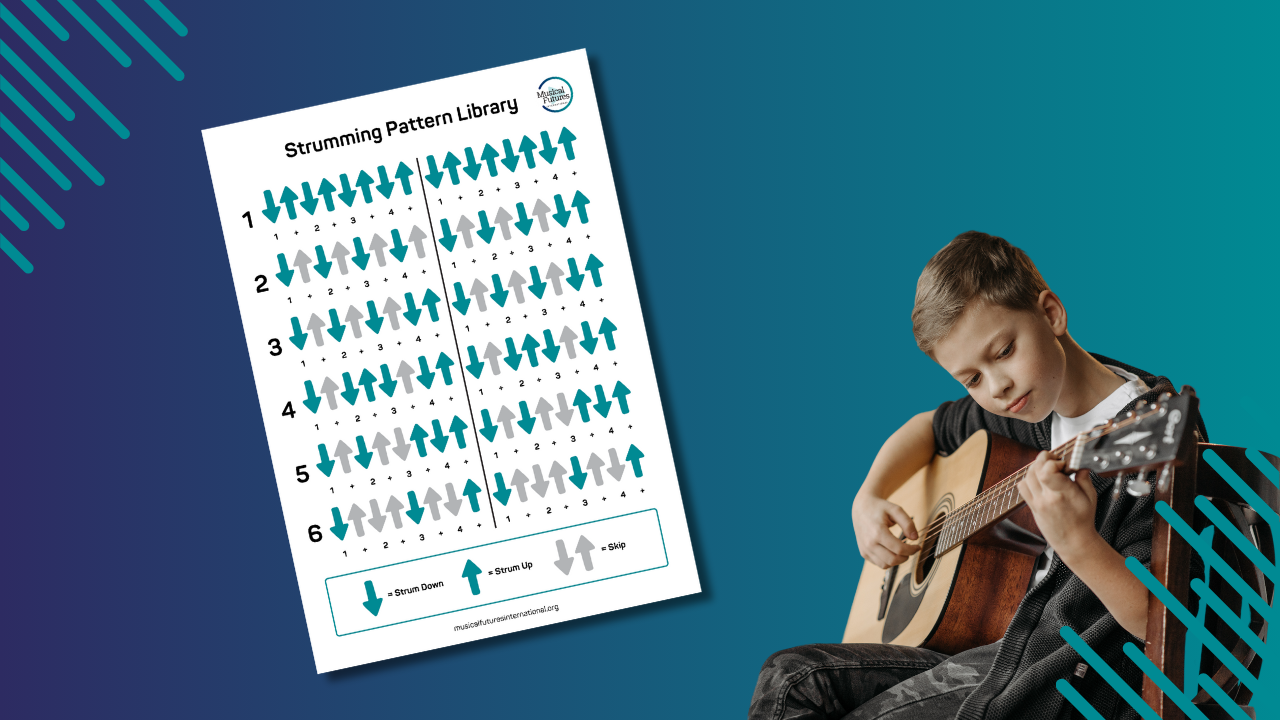
Idea 1 – compose your own strumming patterns
As soon as they could hold the instrument securely, strum with control and play A minor confidently, they began creating their own strumming patterns using these templates. They used these to play along with the Musical Futures International ECP Uke scheme 1 chord Am jam backing track.
Some added extra chords if they were ready. Most stayed with open strings while building strength and co-ordination. Everyone was able to contribute at their own level. The backing track was played throughout so that there was always a link back to a musical outcome and a ‘real’ piece of music.
From the outset, they were not just learning how to play, but were also shaping the music themselves.
Idea 2 – compose, notate and play a melody
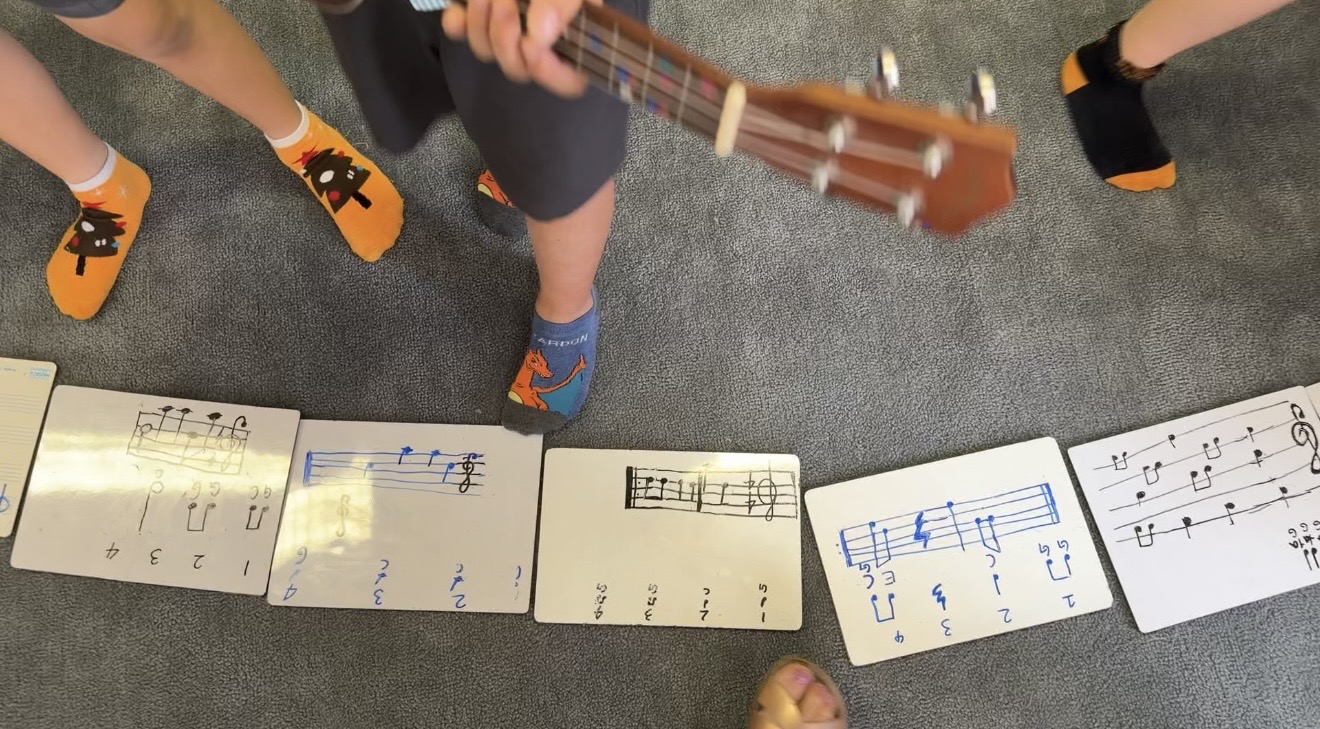
We warmed up with a play-along video from Mr Henry using open notes C and G, which quickly settled the pulse and got everyone focused.
Working in pairs, students then took a whiteboard and composed a four-beat rhythm. They added open notes we had just played to a stave and we arranged the boards in a long “snake” around the room. Playing along to a simple C–G–Am–F backing track, they followed the boards around the room, reading and performing each other’s riffs as they went.
Because every four-beat idea used the same set of notes, everything fitted. The result was a collaborative piece where each student’s small contribution became part of something bigger. They were composing, performing, reading and listening at the same time, shaping their own pathway through the music.
Idea 3 – Compose your own chord progression
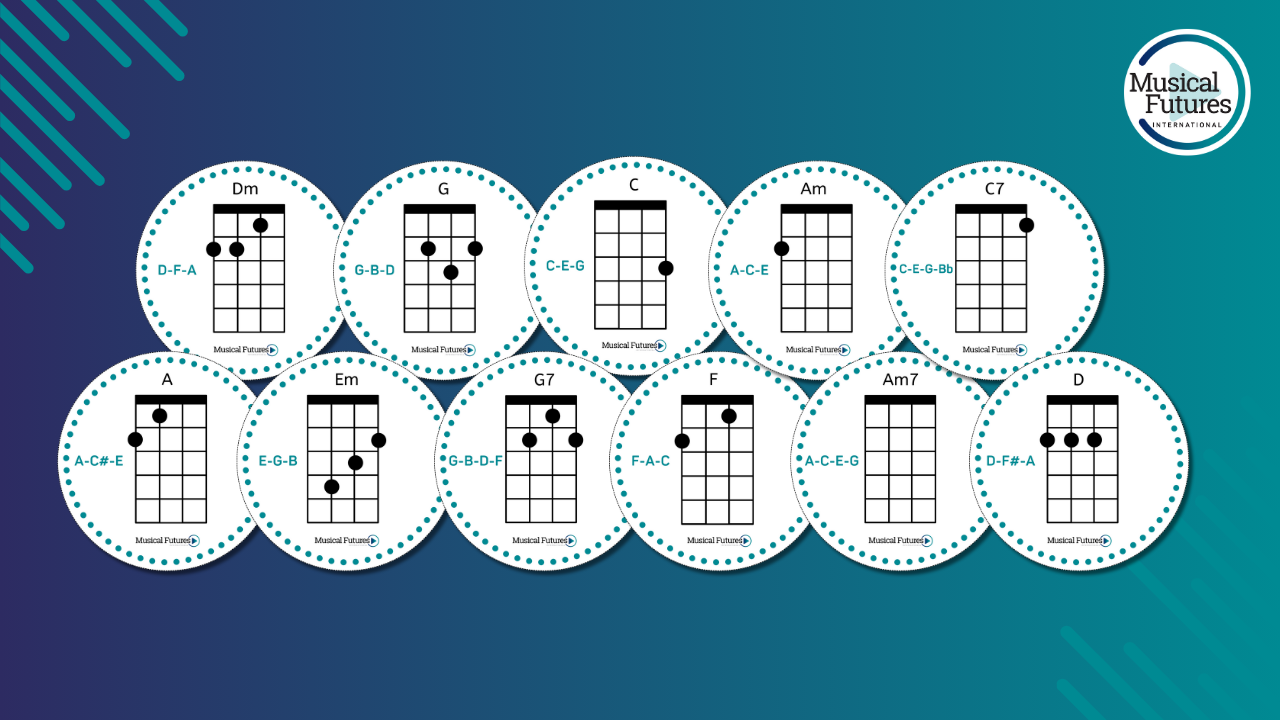
As their confidence with a few chords grew, chord spots gave them more opportunities to create. In groups, they chose chords, tried them out, listened carefully and adjusted. They combined them with their strumming patterns and decided what sounded good and why.
The focus shifted from simply playing the right shape to making musical choices, justifying them and refining them together based on how they sounded.
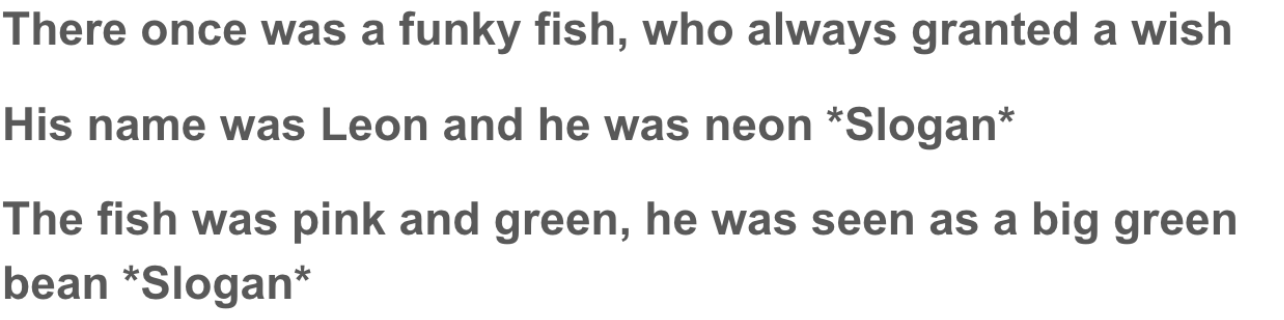
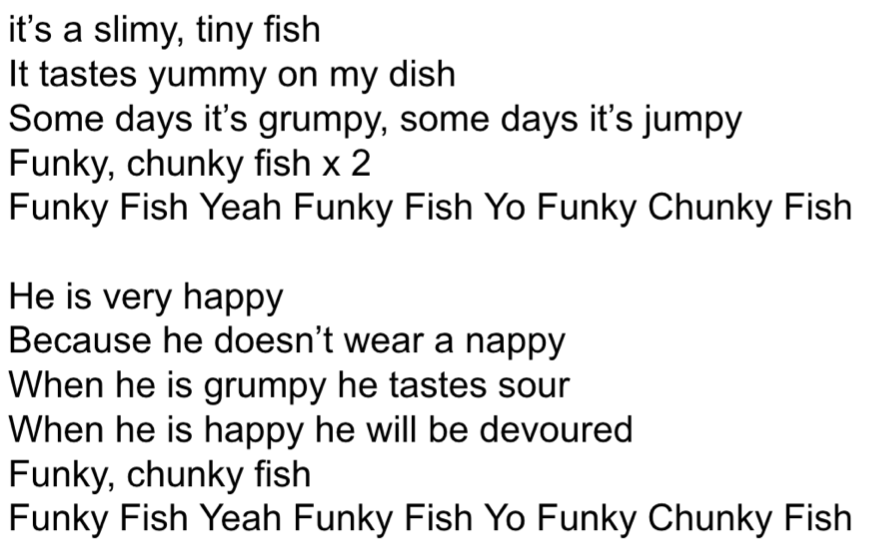
Idea 4: Write and sing your own lyrics to a generic backing track that repeats 5 times
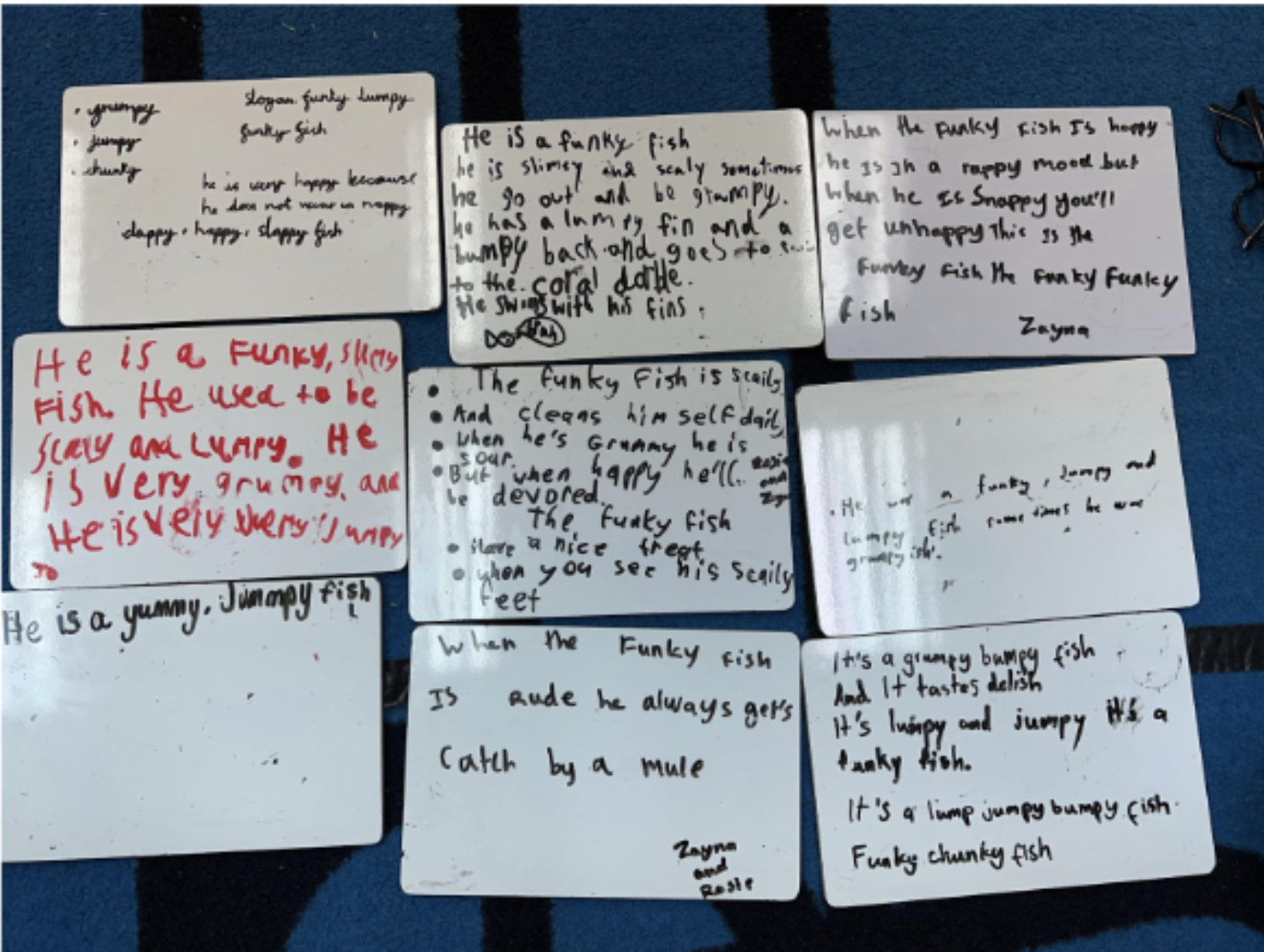
We used the ECP Uke Funky Fish play along video to write and sing our own lyrics. Here are some examples – they loved getting these to rhyme and to come up with crazy stories and adventures for the fish using some of the excellent Hip Hop Vocal resources from Music Will.
If we want students to see themselves as musicians, not just learners of music, then composing/creating music cannot be something we postpone or ignore altogether. It has to sit alongside playing from the very beginning.
Across these lessons, the pattern is simple. As soon as students have enough technical control to make a sound, they can start making choices. Whether that is shaping a strumming pattern, building a 2-note, four-beat riff, selecting chords, or deciding what sounds good together, the creative act is woven into the practical music making.
Explore, Recreate and Create can sit side by side within a single lesson, allowing musical understanding to develop as a natural part of the process rather than as an added extra.
We often recognise the creative spark when we see it emerging as students play. The challenge, perhaps, is to notice those moments and plan for them in all lessons, building in regular opportunities to be intentional about composing as the learning unfolds.
 Anna Gower